Who Is Kakuryu?
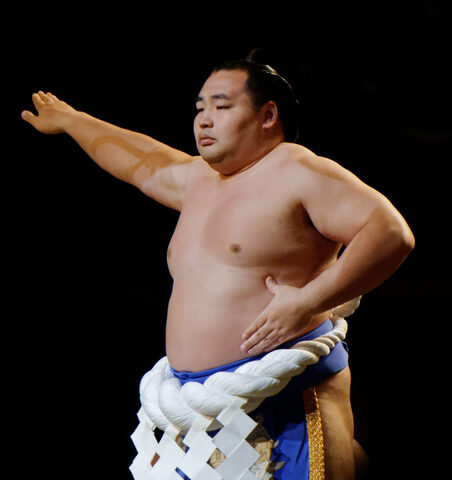
Photo: yoppy / CC BY 2.0
Kakuryu Rikisaburo (鶴竜 力三郎), born Mangaljalavyn Anand on August 10, 1985 in Ulaanbaatar, Mongolia, was the 71st Yokozuna in sumo history. He competed from Michinoku stable, won 6 tournament championships, and retired in March 2021 after a career that spanned two decades of elite competition.
To appreciate Kakuryu fully, you have to understand the context in which he competed. His entire Yokozuna career unfolded in the long shadow of Hakuho — the 69th Yokozuna and the most decorated wrestler in sumo history. Competing alongside Hakuho, and for part of his career alongside Harumafuji, meant that Kakuryu's six yusho were won in the most contested era of modern sumo. None came easily.
His defining characteristic was composure. Where Asashoryu had fire and Hakuho had relentless dominance, Kakuryu had a quality that his fans prized above all: stillness. He moved decisively, wasted nothing, and on his best days fought with a precision that made difficult techniques look inevitable. He was called "the gentleman Yokozuna" — a label that fit both his demeanor and his style.
Background & Early Life
Mangaljalavyn Anand grew up in Ulaanbaatar, part of the generation of Mongolian wrestlers who would reshape professional sumo across the 2000s and 2010s. Like many of his compatriots, he came to Japan in his teens to pursue a career in the sport — joining Michinoku stable, which had a history of recruiting Mongolian talent.
He made his professional debut in March 2001 and spent the early years of his career building steadily through sumo's lower divisions. His progress was consistent rather than explosive — a pattern that would come to define his entire career. He was not a prodigy who made headlines on arrival; he was a wrestler who got better every year, who learned, adapted, and kept rising.
By the mid-2000s he had established himself in the top Makuuchi division and was clearly destined for the upper ranks. His technical polish and ring sense marked him out even then as a wrestler of exceptional quality.
Career Timeline
| Date | Milestone |
|---|---|
| March 2001 | Professional debut, Michinoku stable |
| January 2004 | Reaches top Makuuchi division |
| January 2011 | Promoted to Ozeki |
| March 2014 | First yusho (14-1 as Ozeki) — earns Yokozuna promotion |
| March 2014 | Promoted to 71st Yokozuna |
| September 2015 | Second yusho |
| November 2016 | Third yusho |
| March 2018 | Fourth yusho |
| May 2018 | Fifth yusho |
| July 2019 | Sixth and final yusho (14-1) |
| 2019–2021 | Recurring injuries; multiple tournament withdrawals |
| March 2021 | Announces retirement |
Statistics & Records
All 6 Yusho
| # | Tournament | Year | Record |
|---|---|---|---|
| 1 | Haru (March, Osaka) | 2014 | 14-1 |
| 2 | Aki (September, Tokyo) | 2015 | 12-3 |
| 3 | Kyushu (November, Fukuoka) | 2016 | 14-1 |
| 4 | Haru (March, Osaka) | 2018 | 13-2 |
| 5 | Natsu (May, Tokyo) | 2018 | 14-1 |
| 6 | Nagoya (July, Nagoya) | 2019 | 14-1 |
Fighting Style
Kakuryu's fighting style was built around yotsu-zumo — belt-fighting — executed with exceptional technical precision. He was most comfortable with a left-hand inside grip (hidari-yotsu), from which he could deploy his full offensive repertoire.
Yorikiri — His Foundation
Kakuryu's most frequent winning technique was yorikiri (force-out) — the most common winning technique in sumo, but one that requires genuine strength and leverage to execute against elite opponents. His ability to establish a dominant grip and steadily drive opponents backward was a product of years of technical refinement.
Utchari — His Signature
What truly distinguished Kakuryu was his utchari — a throw executed at the very edge of the ring, in which a wrestler who appears to be losing reverses the momentum and throws the opponent out just before stepping out himself. It is one of sumo's most spectacular techniques and requires extraordinary balance, timing, and body awareness.
Kakuryu's utchari was among the best in the modern era. He produced the technique in crucial situations — in playoff bouts, in yusho-deciding matches — with a composure that made it look almost casual. For fans who watched his career, a Kakuryu utchari at the tawara (bale edge) is an enduring memory.
Ring Intelligence
Like all great Yokozuna, Kakuryu was a student of sumo. He read opponents carefully, adapted his approach based on who he was facing, and almost never made tactical errors that could be attributed to poor preparation. His tachiai (initial charge) was measured rather than explosive — he wanted to establish position, not blow through opponents.
📺 Watch Kakuryu's Best Bouts
His utchari moments are some of sumo's greatest highlights. From outside Japan, use a VPN to access ABEMA's full archived tournament library.
🔒 Get NordVPN — Watch Sumo AbroadThe Three-Yokozuna Era
From Kakuryu's promotion in March 2014 until Harumafuji's retirement in November 2017, sumo had three simultaneously active Mongolian Yokozuna — a situation unprecedented in the sport's history. Hakuho, Harumafuji, and Kakuryu competed in the same tournaments, contested the same championships, and pushed each other to levels that produced some of the most technically accomplished sumo of the modern era.
For Kakuryu, this era was both a challenge and an opportunity. Competing against Hakuho meant that winning tournaments required defeating arguably the greatest wrestler who ever lived. But it also meant that his 6 yusho carry more weight than the number alone suggests — every one was earned against the deepest field sumo had ever seen.
When Harumafuji retired abruptly in November 2017, the landscape around Kakuryu shifted — yet he reaffirmed his standing the following spring, winning back-to-back championships in March and May 2018.
Later Career & Injuries
From 2018 onward, Kakuryu's career was increasingly defined by the physical cost of two decades of elite competition. Injuries — primarily to his elbow and lower body — forced him to withdraw from multiple consecutive tournaments, a pattern that drew scrutiny under the JSA's informal expectations for Yokozuna.
The Yokozuna rank carries a unique burden: unlike every other rank in sumo, Yokozuna cannot be demoted for poor performance. The only exit from the rank is retirement. This creates a difficult dynamic when a Yokozuna is injured — the wrestler faces pressure to retire once they can no longer compete consistently at the standard expected of the rank's holders.
Kakuryu navigated this pressure with the same composure he brought to the dohyo, competing when he could and withdrawing when he could not. His final yusho, in July 2019, demonstrated that he remained capable of championship-level performance even late in his career — a 14-1 record that silenced those who had questioned his continued presence in the sport.
The COVID-19 pandemic disrupted the 2020–2021 tournament calendar significantly, and Kakuryu was unable to compete in several tournaments during this period. The combination of injury and pandemic-related complications made the path forward increasingly difficult.
Retirement & After Sumo
In March 2021, Kakuryu announced his retirement from professional sumo. The announcement was quiet and dignified — consistent with his reputation throughout his career. He had served as Yokozuna for seven years, competed in sumo's most competitive era, and won championships against the greatest wrestlers of his generation.
After retirement, Kakuryu took a coaching role within the sumo system under the name Michinoku oyakata. He later established Izutsu stable as stable master, continuing to contribute to the sport that defined his adult life. His technical knowledge and calm, analytical approach to sumo made him a natural mentor for the next generation.
Legacy
Kakuryu's legacy is, in a sense, the challenge of being excellent in an era of the extraordinary. Six yusho is a career that most wrestlers could only dream of — yet it will always be measured against Hakuho's 45 in the same era. This is not a criticism; it is simply the context in which he competed.
What endures is the quality of his sumo. The utchari at the edge. The composed tachiai. The sense that every bout was a puzzle he had already solved before his opponent realized the game had started. For those who watched him regularly, Kakuryu was a reminder that sumo at its highest level is as much intellectual as it is physical.
The Mongolian Yokozuna Era — Where Kakuryu Fits
| Yokozuna | # | Yusho | Years active |
|---|---|---|---|
| Asashoryu | 68th | 25 | 2003–2010 |
| Hakuho | 69th | 45 | 2007–2021 |
| Harumafuji | 70th | 9 | 2012–2017 |
| Kakuryu | 71st | 6 | 2014–2021 |
| Hoshoryu | 74th | 3+ | 2024–present |
The Mongolian generation that Kakuryu was part of transformed sumo permanently — in technique, in physical preparation, in the global reach of the sport. He was not its most decorated member, but he was one of its most complete wrestlers. And in sumo, completeness — the ability to fight anyone, in any style, on any given day — is the truest mark of excellence.