Who Is Kisenosato?
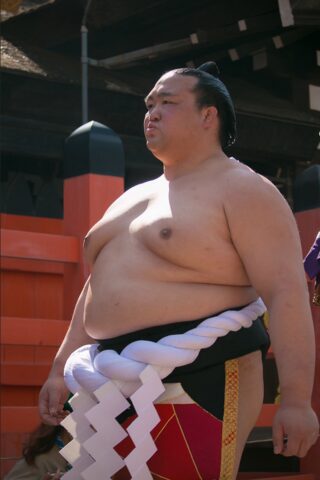
Photo: Quentin Rabier / CC BY-SA 2.0
Kisenosato Yutaka (稀勢の里 寛), ring name Kisenosato, is a former professional sumo wrestler who became the 72nd Yokozuna — the highest rank in sumo — in January 2017. His promotion made him the first Japanese-born Yokozuna in approximately 19 years, ending a long drought that had frustrated sumo fans and pundits across Japan. During that period, the sport's highest ranks had been dominated by wrestlers from Mongolia, Hawaii, and other nations.
Kisenosato's story is inseparable from the emotion of the Japanese public. His promotion was met with widespread celebration, and his subsequent battles against injury — including a legendary performance in which he won a tournament while carrying a serious pectoral muscle injury — cemented his place in sumo folklore. To learn more about how sumo's ranking system works, visit our guide on Sumo Ranks.
Early Life and Entry into Sumo
Kisenosato was born on July 3, 1986, in Ami, Ibaraki Prefecture, Japan. His real name is Hagiwara Yutaka. Growing up in Ibaraki, he showed an early aptitude for physical sports, and as a teenager he caught the attention of sumo scouts. He joined the Naruto stable (later reorganized as the Tagonoura stable) and made his professional debut in March 2002 at just 15 years of age.
His entry into professional sumo came directly from junior high school, bypassing the amateur circuit that many wrestlers go through. This was a sign of how highly his talent was regarded from an early age. He quickly began climbing through the lower divisions, demonstrating a physicality and technique that set him apart from his peers.
Rise Through the Ranks
Kisenosato's ascent through sumo's ranks was remarkably swift by the standards of professional sumo. He reached the top division, the Makuuchi, in November 2004, having just turned 18. His progress through the lower divisions had been largely uninterrupted, and he quickly established himself as a credible presence in the top division.
By 2006, he had reached the prestigious Sanyaku ranks — the three named ranks below Yokozuna and Ozeki — and was competing regularly at the Komusubi and Sekiwake levels. Each tournament at these ranks brought him into contact with sumo's elite, and he earned his reputation as a tough, technically sound wrestler who was particularly difficult to defeat at close range.
For readers new to sumo, these ranks are explained in detail in our article on how sumo rankings work, and for a broader introduction to the sport, see our How Sumo Works guide.
Years as Ozeki — The Long Wait
Kisenosato was promoted to Ozeki — the second-highest rank in sumo — following the January 2011 tournament. His promotion was based on an outstanding run of performances, and he was widely celebrated as a future Yokozuna candidate. However, what followed was one of the most emotionally agonizing stretches in modern sumo history.
For years, Kisenosato performed at an extremely high level as Ozeki, consistently finishing with double-digit wins and regularly challenging for tournament championships. Yet time and again, he would fall just short of winning a basho (tournament). He was a runner-up on numerous occasions, earning the nickname among some observers as the "best wrestler never to win a tournament" — a label that was simultaneously a compliment to his consistent excellence and a reminder of his elusive first championship.
The pressure was immense. As a Japanese wrestler at the top of the sport, Kisenosato carried the hopes of an entire nation. Japan's sumo fans desperately wanted to see a homegrown Yokozuna, and Kisenosato was clearly the most likely candidate to achieve it. But tournament after tournament, the championship slipped away — sometimes to Mongolian greats like Hakuho, Harumafuji, or Kakuryu.
His first tournament championship finally came in January 2017 at the Hatsu Basho (New Year Tournament), breaking his long drought with an emotional 14-1 victory. That championship set the stage for his Yokozuna promotion.
Promotion to Yokozuna — A National Moment
The decisive moment came at the January 2017 Hatsu Basho. Kisenosato won the tournament with a 14-1 record — his first career championship — and shortly afterward, the Yokozuna Deliberation Council recommended his promotion to the sport's highest rank. The Japan Sumo Association formally approved the promotion in late January 2017, and Kisenosato became the 72nd Yokozuna in sumo history, taking the rank from the following (March 2017) tournament.
He was the first Japanese-born Yokozuna since Wakanohana III, who retired in 2000 — a gap of approximately 17 years. During those nearly two decades, all Yokozuna had come from outside Japan. Kisenosato's promotion was therefore far more than a personal achievement; it was a cultural and national milestone.
The formal rope-tying ceremony — the Yokozuna Dohyo-iri — was held at Meiji Shrine in Tokyo, a traditional and deeply symbolic ritual for new Yokozuna. Thousands turned out to witness it, and the occasion was broadcast widely. The emotion in Kisenosato's face during the ceremony was palpable, and images of it became iconic.
Career Statistics
Below is a summary of Kisenosato's key career statistics across his professional sumo career:
| Category | Detail |
|---|---|
| Real Name | Hagiwara Yutaka |
| Date of Birth | July 3, 1986 |
| Birthplace | Ami, Ibaraki Prefecture, Japan |
| Stable | Tagonoura Stable (formerly Naruto Stable) |
| Professional Debut | March 2002 |
| Makuuchi Debut | November 2004 |
| Ozeki Promotion | Following January 2011 Tournament |
| Yokozuna Promotion | February 2017 |
| Yokozuna Rank | 72nd Yokozuna |
| Tournament Championships (Yusho) | 2 |
| Height | Approximately 188 cm (6 ft 2 in) |
| Weight | Approximately 177 kg (390 lbs) at peak |
| Retirement | January 2019 |
| Post-retirement Name | Arauma (stable master) |
Fighting Style
Kisenosato was renowned for his powerful, physical style of sumo. He was a classic yotsu-zumo specialist — meaning he excelled at belt-grappling, preferring to get a firm grip on his opponent's mawashi (belt) and using his exceptional lower-body strength and balance to control the bout from close range.
Key Techniques (Kimarite)
- Yorikiri (Force-out): His most frequently used winning technique, leveraging his immense pushing power at the belt to drive opponents out of the ring.
- Yoritaoshi (Force-down): A variation where he would topple his opponent forward while driving them out.
- Uwatenage (Overarm throw): When he secured an outside grip on the belt, he possessed a powerful throw capability.
- Oshidashi (Push-out): He could also win with straight pushing, particularly against opponents who tried to avoid the belt.
What made Kisenosato particularly formidable was his mental toughness and his ability to absorb pressure. He rarely panicked when driven to the edge of the ring, and he had an exceptional ability to recover from seemingly desperate positions. His footwork was notably good for a man of his size, giving him stability that allowed him to redirect the energy of attacking opponents.
His physical build — tall for a sumo wrestler, with a powerful chest and strong legs — suited his style perfectly. He was not a flashy wrestler; he won through relentless pressure, superior conditioning, and technical correctness rather than through trick moves or spectacular throws.
The Injury — A Devastating Blow
Just weeks after his Yokozuna promotion, Kisenosato suffered a catastrophic injury at the March 2017 Haru Basho in Osaka. During a bout, he tore his left pectoral muscle — a severe injury that would have sidelined most athletes immediately. What Kisenosato did next became one of the most talked-about moments in modern sumo.
He continued competing in the tournament, fighting through excruciating pain in each successive bout. Despite being clearly hampered, he won the tournament — his second career championship — demonstrating a level of mental fortitude that shocked and moved viewers around Japan. Images of Kisenosato grimacing through pain while continuing to fight became some of the most widely shared in Japanese sports media.
However, the long-term consequences were severe. The injury fundamentally compromised his ability to perform at Yokozuna level. A Yokozuna who cannot compete is expected to retire — it is one of the solemn responsibilities that comes with the rank. Yet the injury also meant Kisenosato was physically unable to train and compete as he once had.
He spent long periods absent from competition over the following two years, returning periodically and then withdrawing again. Each return was met with enormous hope from the Japanese public; each withdrawal was accompanied by national disappointment. His situation became a subject of intense debate within sumo circles — some felt he should retire to preserve his dignity and the prestige of the Yokozuna rank; others wanted to give him every possible chance to recover and compete again.
Retirement and Legacy
Kisenosato officially announced his retirement in January 2019, shortly after withdrawing from the Hatsu Basho tournament due to his injuries. The announcement came at a press conference that was broadcast live across Japan, and his emotional words moved many viewers. He acknowledged that he could no longer perform at the level required of a Yokozuna.
Upon retirement, he took the elder name Arauma and remained within the sumo world as a stable master and coach, continuing his connection to the sport he had dedicated his life to since the age of 15.
His legacy is complicated by the brevity of his time at the top. With only two tournament championships to his name — modest by the standards of the Mongolian Yokozuna who dominated his era — his statistical record does not fully capture his significance. What it cannot measure is what he meant to Japan: the long-awaited symbol of a Japanese wrestler who could reach the very summit of the sport.
He is remembered not only for his talent but for his perseverance, his emotional depth, and the bittersweet nature of a career defined as much by injury and near-misses as by triumph. In many ways, Kisenosato's story is quintessentially human — a pursuit of excellence, achieved briefly, then taken away by circumstance.
National Significance
To understand why Kisenosato's promotion mattered so much, it helps to understand the cultural weight of sumo in Japan. Sumo is not merely a sport in Japan — it is considered a national tradition, deeply intertwined with Shinto ritual, Japanese identity, and the country's sense of itself. For a generation of Japanese sumo fans, the dominance of foreign-born wrestlers — however technically brilliant those wrestlers were — had created a feeling of disconnection from their own national sport.
The arrival of a Japanese Yokozuna, after nearly two decades, felt like a restoration of something that had been missing. Kisenosato became a figure of profound national sentiment. His face appeared on magazine covers and news programs across the country. He was awarded the prestigious People's Honor Award (Kokumin Eiyosho) by the Japanese government, recognizing his cultural impact.
Even his injury and the circumstances of his retirement — while deeply sad — added to his status in Japan. His willingness to compete through pain, his loyalty to the sport, and his graceful exit were seen as embodying traditional Japanese values. He left sumo as a beloved figure, not a diminished one.
For a deeper understanding of sumo's traditions and structure, visit our How Sumo Works guide, or explore the full Sumo Sumo Sumo homepage for more resources.
Frequently Asked Questions About Kisenosato
Why was Kisenosato's Yokozuna promotion such a big deal?
Kisenosato became the first Japanese-born Yokozuna in approximately 19 years when he was promoted in early 2017. During that period, all Yokozuna had come from outside Japan — primarily Mongolia. Since sumo is Japan's national sport and Yokozuna is its highest rank, the absence of a Japanese wrestler at the top had been a source of frustration and sadness for many fans. Kisenosato's promotion ended that drought and was celebrated as a major cultural moment across the country.
What number Yokozuna was Kisenosato?
Kisenosato was designated the 72nd Yokozuna in the history of professional sumo. Yokozuna are numbered sequentially, with the first Yokozuna recognized retroactively from sumo's early history. Each new Yokozuna receives a permanent number that stays with them throughout their life.
How many tournament championships did Kisenosato win?
Kisenosato won two official tournament championships (yusho) during his career, both in 2017. His first came in January 2017 at the Hatsu Basho (14-1), ending years of near-misses and earning his Yokozuna promotion. His second — remarkably — came in March 2017 while he was competing with a serious torn pectoral muscle injury shortly after that promotion.
What injury ended Kisenosato's career?
Kisenosato suffered a torn left pectoral muscle during the March 2017 Haru Basho in Osaka. Despite competing through the pain and winning that tournament, the injury proved impossible to fully recover from. He spent most of the following two years absent from competition and ultimately retired in January 2019 after being unable to return to competitive form.
Where was Kisenosato born?
Kisenosato was born on July 3, 1986, in Ami, Ibaraki Prefecture, Japan. His real family name is Hagiwara; his given name is Yutaka. He entered professional sumo directly from junior high school at age 15.
Which stable did Kisenosato belong to?
Kisenosato originally trained under the Naruto stable. Following organizational changes within the Japan Sumo Association and the death of his original stable master, the stable was reorganized and renamed the Tagonoura stable. He competed under the Tagonoura stable banner for a significant portion of his career, including during his Yokozuna years.
What was Kisenosato's fighting style?
Kisenosato was primarily a yotsu-zumo wrestler — he specialized in belt-grappling rather than pushing techniques. His preferred winning move was yorikiri (force-out), in which he secured a grip on his opponent's belt and drove them out of the ring using his powerful lower body. He was known for exceptional stability, strong lower-body technique, and remarkable composure under pressure. He was not particularly flashy but was extremely difficult to defeat once he established his preferred position.
What did Kisenosato do after retiring from sumo?
Upon retiring in January 2019, Kisenosato took the elder name Arauma and remained active within the sumo world in an official capacity. He works as a stable master and coach within the Japan Sumo Association, helping to train and develop the next generation of sumo wrestlers. This is a common path for senior wrestlers who wish to remain connected to the sport after their competitive careers end.
How long was Kisenosato a Yokozuna?
Kisenosato was promoted to Yokozuna in January 2017 (taking the rank from the March 2017 tournament) and retired in January 2019 — approximately two years at the sport's highest rank. Due to his injury in March 2017, he spent much of that time either absent from competition or struggling to return to full fitness. It was, by most measures, a shorter and more troubled Yokozuna tenure than his talent warranted, though it was no less meaningful for the Japanese public.
Did Kisenosato receive any government honors?
Yes. Following his historic Yokozuna promotion, Kisenosato was awarded the People's Honor Award (Kokumin Eiyosho) by the Japanese government — one of Japan's highest civilian recognitions. The award acknowledged not just his sporting achievement but his profound cultural significance as the first Japanese Yokozuna in nearly two decades.