Who Is Hoshoryu?
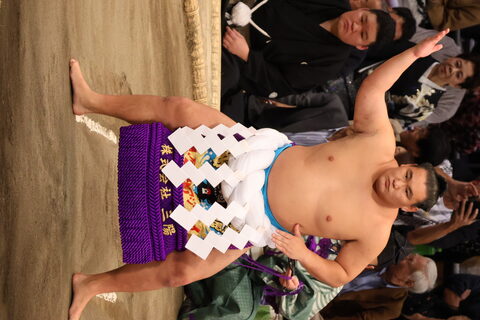
Photo: A2B48 / CC BY 4.0
Hoshoryu Tomokatsu (豊昇龍 智勝), known in the sumo world simply as Hoshoryu, is a professional sumo wrestler who was promoted to the rank of Yokozuna — the highest achievable title in sumo — becoming the sport's 74th Yokozuna. His rise through the sumo ranks was meteoric, fueled by extraordinary natural talent, fierce competitive drive, and a pedigree that few wrestlers can match. He is the nephew of Asashoryu Akinori, widely considered one of the greatest Yokozuna in the history of the sport.
Hoshoryu competes from the Tatsunami stable and holds Mongolian nationality. He is one of the most technically sophisticated wrestlers in the modern era, blending exceptional agility, ring awareness, and a wide repertoire of kimarite (winning techniques) that keeps opponents constantly off-balance. His promotion to Yokozuna was a defining moment for sumo and a story that captivated fans around the world.
To understand Hoshoryu's place in the sport, it helps to understand the sumo ranking system and just how rare and prestigious the title of Yokozuna truly is. Of the many thousands of wrestlers who have competed throughout sumo's centuries-long history, only 74 have ever been granted that honor.
Personal Background & Family
Early Life
Hoshoryu was born on November 26, 1999, in Ulaanbaatar, Mongolia. He grew up in a family for whom sumo was not merely a sport but a calling. His uncle, Asashoryu, dominated the sumo world in the 2000s, winning 25 tournament championships and holding the Yokozuna title from 2003 until his retirement in 2010. Growing up watching his uncle compete at the highest level, sumo became an integral part of Hoshoryu's identity from a very young age.
He showed early promise as an athlete, and following the path blazed by his uncle — as well as other great Mongolian wrestlers like Hakuho and Kakuryu — he made the decision to pursue a career in professional sumo in Japan. He was recruited to the Tatsunami stable, a respected sumo stable in Tokyo with a long history of producing capable wrestlers.
The Asashoryu Connection
The familial bond with Asashoryu is central to Hoshoryu's story, but it is also a double-edged sword. The comparison brings immense pressure and expectation, yet it also provided Hoshoryu with invaluable guidance. Asashoryu was known for his ferocious, relentless attacking style, and observers have noted that Hoshoryu shares that same competitive hunger and warrior spirit — though his technical repertoire is arguably even broader than his uncle's was.
Career Timeline & Rise to Yokozuna
Debut and Early Ranks
Hoshoryu made his professional sumo debut in March 2018, entering at the bottom of the professional ranking ladder. His ascent through the lower divisions was swift and convincing. He displayed from the very beginning an athleticism and technical awareness that marked him as a future star. He moved through the jonokuchi, jonidan, sandanme, and makushita divisions at a pace that drew attention from sumo insiders.
Reaching the Top Division
Hoshoryu broke into the Makuuchi (top division) in January 2020, an impressive achievement given how recently he had started his professional career. His debut in the top division coincided with enormous competition — Yokozuna Hakuho was still active, along with a roster of elite wrestlers. Nonetheless, Hoshoryu held his own and continued to improve with each tournament.
His performances in the top division demonstrated not only physical prowess but also a mature tactical approach to sumo. He was willing to take risks, execute complex throws, and adapt his strategy mid-bout in ways that younger wrestlers rarely manage. Sumo observers quickly identified him as one of the most exciting prospects in the sport.
Climbing the Sanyaku Ranks
Hoshoryu rose steadily through the key sanyaku ranks — Komusubi, Sekiwake, and eventually Ozeki. His promotion to Ozeki came after stringing together impressive tournament results, demonstrating the consistency required at sumo's second-highest permanent rank. To learn more about what these ranks mean and how promotion works, visit our guide to sumo ranks explained.
At the Ozeki level, Hoshoryu continued to post strong records and claimed a yusho (tournament championship), establishing himself not as merely a promising talent but as one of the elite wrestlers in the world.
Promotion to Yokozuna
Hoshoryu's promotion to the rank of 74th Yokozuna came after a sustained period of exceptional performance. The Yokozuna Deliberation Council — the body responsible for recommending Yokozuna promotions — cited his tournament victories, his consistency, and his dignity in conduct as hallmarks befitting the sport's highest honor. The promotion was officially announced in early 2025 (for the March 2025 Haru Basho), making Hoshoryu one of the youngest wrestlers to achieve the title in the modern era.
The Yokozuna promotion ceremony and his dohyo-iri (ring-entering ceremony) debut in the distinctive Yokozuna rope belt were celebrated events both in Japan and in Mongolia, where Hoshoryu has become a national hero. His uncle Asashoryu was reportedly among those celebrating the achievement most proudly.
Key Career Milestones
- March 2018: Professional debut
- January 2020: Makuuchi (top division) debut
- Achieved Komusubi rank during 2020–2021
- Promoted to Sekiwake during 2021–2022
- Promoted to Ozeki — sumo's second-highest rank
- Won a tournament championship (yusho) at the Ozeki level
- 2025: Promoted to Yokozuna — 74th in history
Career Statistics
Below is a summary of key career statistics for Hoshoryu. Note that his career is ongoing as of early 2026.
| Category | Detail |
|---|---|
| Shikona (Ring Name) | Hoshoryu Tomokatsu (豊昇龍 智勝) |
| Stable | Tatsunami |
| Birthdate | November 26, 1999 |
| Birthplace | Ulaanbaatar, Mongolia |
| Height | Approximately 187 cm (6 ft 2 in) |
| Weight | Approximately 145–155 kg (320–340 lbs) |
| Professional Debut | March 2018 |
| Top Division Debut | January 2020 |
| Highest Rank | Yokozuna (74th) |
| Tournament Championships (Yusho) | 2 top-division (career ongoing) |
| Notable Family | Nephew of Asashoryu (72nd Yokozuna) |
Fighting Style & Techniques
An Athletic, Versatile Approach
Hoshoryu's fighting style is one of the most admired in contemporary sumo. Unlike some wrestlers who rely primarily on brute force or a single dominant technique, Hoshoryu is celebrated for his versatility, agility, and ring IQ. He can win from virtually any position on the dohyo, whether he is being pushed backward or driving an opponent toward the edge.
His footwork is exceptional — he moves with a speed and fluidity that belies his size, constantly repositioning to gain leverage and create angles for attack. This athleticism is a direct inheritance from his Mongolian wrestling background and the training culture of the Tatsunami stable.
Preferred Kimarite (Winning Techniques)
Hoshoryu is proficient in a wide array of kimarite, the official winning techniques recognized by the Japan Sumo Association. Among his most frequently used and celebrated are:
- Uwatenage (overarm throw): Using a high grip on the opponent's belt to execute a sweeping throw — a technique he deploys with spectacular timing.
- Shitatenage (underarm throw): A low-grip throw that requires close-in grappling and precise timing.
- Hatakikomi (slap down): Pulling an opponent off balance and slapping them down — a technique he uses effectively as a counter when opponents overcommit.
- Oshidashi (frontal force-out): Driving opponents straight back and out of the ring — demonstrating that he can also win with straightforward power.
- Tsukiotoshi (thrust down): Pushing an opponent sideways and down, exploiting their forward momentum.
One of the most thrilling aspects of watching Hoshoryu compete is that he seems genuinely capable of finding a winning technique no matter how a bout develops. He has won bouts from seemingly impossible defensive positions, executing throws at the last possible moment — a quality that echoes his uncle Asashoryu's flair for the dramatic.
Mental Approach and Competitive Fire
Hoshoryu brings an intense competitive mentality to every bout. He is visibly emotionally engaged in competition — a quality that has occasionally drawn comment from officials who expect Yokozuna to project an air of serene dominance. However, this fire is also a source of his greatness. He fights for every point, never concedes a bout until he is forced out of the ring or to the ground, and has demonstrated the ability to turn around seemingly losing situations through sheer will and technical brilliance.
This mental tenacity is something he has openly credited to his uncle's influence and to the culture of his stable. Understanding the mental and physical demands of sumo at this level requires understanding how sumo works — from the basic rules to the deeper traditions that shape every wrestler's approach.
Physical Profile
At approximately 187 cm tall and weighing around 145–155 kg, Hoshoryu is not among the heaviest wrestlers in the top division. This means he cannot simply rely on mass to overwhelm opponents. Instead, his success comes from superior technique, timing, and the kind of athletic explosive power that his physique enables. His relatively lean (for sumo) build gives him exceptional mobility and the ability to execute complex throws that heavier wrestlers physically cannot attempt.
Life as Yokozuna
The Weight of the Rope
Being awarded the rope belt of Yokozuna is one of the most profound honors in Japanese sport. The tsuna (the distinctive white rope worn around the waist during the dohyo-iri ceremony) weighs approximately 15–20 kg and is the physical symbol of the Yokozuna's status. Unlike lower ranks, a Yokozuna can never be demoted — the only option if performance declines is voluntary retirement. This creates enormous psychological pressure that has ended careers prematurely.
Hoshoryu's dohyo-iri — performed in one of the two traditional styles, either Unryu or Shiranui — became a celebrated new addition to sumo's ceremonial landscape. Each tournament, his ring-entering ceremony draws appreciative audiences who come to observe the ritual alongside the competition itself.
Responsibility and Expectations
As Yokozuna, Hoshoryu carries not just his own ambitions but the expectations of an institution. Yokozuna are expected to win — not just compete — at every tournament. A poor showing draws intense media scrutiny in Japan. There is also a cultural dimension: as a foreign-born Yokozuna in a sport deeply embedded in Japanese cultural identity, Hoshoryu navigates complex expectations around conduct, public presentation, and ambassadorship for the sport.
He has generally met these challenges with maturity, though his occasionally fiery courtside demeanor has generated discussion. Many fans appreciate his visible passion as proof of genuine engagement with the sport's competitive spirit.
Tournament Performance as Yokozuna
Since his promotion, Hoshoryu has competed in the six annual honbasho (official tournaments) with the burden and privilege of the Yokozuna rank. His results have included strong championship showings and some of the struggles with injury that come with competing at elite level year-round. As with all Yokozuna, managing physical condition across six 15-day tournaments per year is a significant challenge, and strategic withdrawals (kyujo) to protect long-term health are part of the reality of the rank.
Legacy & Impact
A New Chapter in Mongolian Sumo Dominance
The story of Mongolian wrestlers in sumo is one of the most remarkable in modern sports history. Beginning with Kyokushuzan and accelerating dramatically with Asashoryu and Hakuho, Mongolian wrestlers have demonstrated an extraordinary capacity to master — and in many ways redefine — Japanese sumo at its highest levels. Hoshoryu's elevation to Yokozuna continues this tradition, but adds a new dimension: he is the first wrestler to become Yokozuna who is the nephew of a previous Yokozuna, creating a generational dynasty that is unique in the sport's long history.
Inspiring a New Generation
In Mongolia, Hoshoryu's success has inspired a new generation of young athletes to pursue sumo. His story — following his legendary uncle to Japan, ascending through the ranks, and reaching the summit — is a compelling narrative of ambition and achievement. In Japan, he has attracted a dedicated fanbase who appreciate both his technical brilliance and his obvious passion for competition.
His Place in Sumo History
At the time of writing (early 2026), Hoshoryu's career is still unfolding. The question of where he will ultimately rank among the Yokozuna is one that sumo fans debate with great enthusiasm. If he can maintain his health and competitive edge for the next several years, he has the talent to accumulate a record of tournament victories that would place him among the sport's all-time greats. For now, he stands as one of the most exciting active wrestlers in the world and a worthy bearer of sumo's most prestigious title.
To explore the full context of sumo's ranking system and what it takes to reach the top, visit our comprehensive guide to sumo ranks, or get started with the fundamentals at our how sumo works guide. You can also explore the broader world of sumo at the Sumo Sumo Sumo homepage.
Frequently Asked Questions About Hoshoryu
Who is Hoshoryu in sumo?
Hoshoryu Tomokatsu is a Mongolian professional sumo wrestler who competes in Japan's top sumo division. He is the 74th Yokozuna — the highest rank in sumo — and is famous both for his extraordinary technical skill and for being the nephew of the legendary 72nd Yokozuna, Asashoryu.
What number Yokozuna is Hoshoryu?
Hoshoryu is the 74th Yokozuna in the history of sumo wrestling. This means that only 73 wrestlers in all of sumo's centuries of history achieved this rank before him — making it one of the most elite titles in all of sport.
Is Hoshoryu really Asashoryu's nephew?
Yes. Hoshoryu is the nephew of Asashoryu Akinori, the 72nd Yokozuna who dominated sumo throughout the 2000s. Asashoryu won 25 tournament championships during his career and is widely regarded as one of the greatest wrestlers in sumo history. The familial connection makes Hoshoryu's achievement as the 74th Yokozuna uniquely historic — he is the first wrestler to become Yokozuna who is the nephew of a previous Yokozuna.
When was Hoshoryu born and where is he from?
Hoshoryu was born on November 26, 1999, in Ulaanbaatar, Mongolia. He moved to Japan to pursue a professional sumo career and joined the Tatsunami stable in Tokyo, following a path taken by many elite Mongolian wrestlers before him.
What stable does Hoshoryu belong to?
Hoshoryu competes under the Tatsunami stable (Tatsunami-beya), a traditional sumo stable based in Tokyo. Each sumo stable is led by a stablemaster (oyakata) who oversees the training, living arrangements, and career development of the wrestlers under his care.
What is Hoshoryu's fighting style?
Hoshoryu is celebrated for his versatility, athleticism, and wide range of winning techniques. He is not purely a power wrestler — instead, he excels at throws (particularly uwatenage and shitatenage), has exceptional footwork, and possesses superb ring awareness. He can win from defensive positions through perfectly timed counter-throws, which is reminiscent of his uncle Asashoryu's ability to produce spectacular finishes from difficult situations.
How many tournament championships has Hoshoryu won?
Hoshoryu has won 2 top-division yusho (tournament championships) so far, including the title that contributed to his Yokozuna promotion. As his career is still active, his championship tally may continue to grow.
When was Hoshoryu promoted to Yokozuna?
Hoshoryu was promoted to the rank of 74th Yokozuna in 2025 (for the March 2025 Haru Basho), after a period of sustained elite performance including tournament victories. The Yokozuna Deliberation Council recommended his promotion based on his competitive results and conduct befitting the sport's highest honor. At the time of his promotion, he was one of the younger wrestlers to achieve the title in the modern era.
Can Hoshoryu be demoted from Yokozuna?
No. Unlike all other ranks in sumo, the title of Yokozuna is permanent and cannot be taken away through poor performance. However, Yokozuna are expected to maintain a high standard, and if performance deteriorates significantly, the expectation — both cultural and institutional — is that the wrestler will voluntarily retire. This tradition makes the rank both glorious and weighty, as accepting promotion means accepting that retirement must eventually follow if the standard cannot be maintained.
How does Hoshoryu compare to his uncle Asashoryu?
Both wrestlers share a fierce competitive drive and a flair for dramatic victories, but they have distinct styles. Asashoryu was renowned for his dominant forward pressure, explosive tachiai (initial charge), and psychological intimidation. Hoshoryu is arguably more technically diverse — his range of throws and counter-techniques is exceptionally broad, and he is more comfortable fighting from a reactive, defensive posture when necessary. Whether Hoshoryu will match or exceed his uncle's record of 25 tournament championships remains one of sumo's most compelling open questions.