Who Is Chiyonofuji?
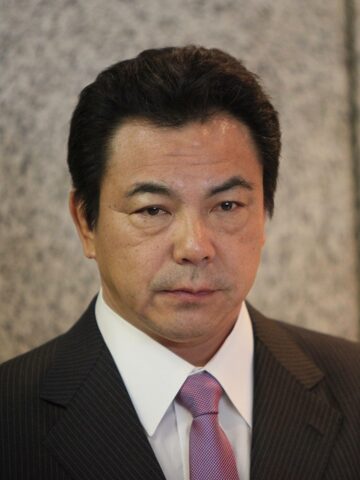
Photo: Route246 / CC BY 3.0
Chiyonofuji Mitsugu (千代の富士 貢), born Akimoto Mitsugu on June 1, 1955 in Fukushima, Hokkaido, is the 58th Yokozuna in sumo history and one of the most celebrated athletes Japan has ever produced. Known worldwide by his nickname "The Wolf" (ウルフ), he dominated professional sumo throughout the 1980s with a combination of physical conditioning, technical mastery, and competitive intensity that had never been seen in the sport before.
In a sport defined by mass — where heavier wrestlers have a structural advantage — Chiyonofuji competed at just 126kg, lean and powerfully muscled in a way that was visually striking and mechanically extraordinary. He won 31 tournament championships, the third-highest total in sumo history behind Hakuho's 45 and Taiho's 32, and achieved a 53-consecutive-win streak in 1988 that captured the imagination of a generation of Japanese sports fans.
He retired in May 1991, became stable master of Kokonoe stable, and continued to shape the sport until his death from pancreatic cancer on July 31, 2016. His passing prompted nationwide mourning in Japan. To understand modern sumo — its obsession with technique, its reverence for wrestlers who transcend physical limitation — is to understand the world Chiyonofuji built.
Early Life & Background
Hokkaido Origins
Akimoto Mitsugu grew up in Fukushima, a small town on Hokkaido's southwestern coast. He was not a large child — those who knew him describe a wiry, quick-moving boy who showed athletic promise but not the kind of physical bulk that typically predicts sumo success. He joined Kokonoe stable in 1970 at age 15, entering the professional ranks with the ring name Chiyonofuji — a name chosen to connect him to the Kokonoe stable's distinguished legacy.
The Shoulder Problem That Changed Everything
Early in his career, Chiyonofuji suffered from a serious weakness: a chronically dislocating shoulder. The injury was severe enough that his career seemed genuinely in jeopardy. His response was extraordinary — he embarked on an unprecedented weightlifting and conditioning program designed to build the muscular mass around the joint that would hold it in place.
The result transformed him physically. Where most sumo wrestlers build bulk through diet and training that emphasizes mass, Chiyonofuji built dense, functional muscle. His physique — visible abs, defined shoulders, a clearly muscular frame — was so unusual for sumo that it became part of his identity and contributed directly to his nickname. The Wolf did not look like other wrestlers. And he did not fight like them either.
Career Timeline
| Date | Milestone |
|---|---|
| September 1970 | Professional debut, Kokonoe stable |
| January 1975 | Reaches top Makuuchi division |
| January 1978 | First yusho (tournament championship) |
| March 1981 | Promoted to Ozeki |
| September 1981 | Promoted to 58th Yokozuna |
| 1981–1988 | Period of peak dominance — 25 of his 31 yusho |
| 1988 | 53-consecutive-win streak — a record |
| 1989 | 1,000th career win in top division; People's Honour Award |
| May 1991 | Retirement announced after loss to Kotonishiki |
| 1991–2016 | Kokonoe stable master; trains next generation |
| July 31, 2016 | Passes away from pancreatic cancer, aged 61 |
Records & Statistics
Yusho Count by Tournament
| Tournament | Wins |
|---|---|
| Hatsu (January, Tokyo) | 8 |
| Haru (March, Osaka) | 5 |
| Natsu (May, Tokyo) | 5 |
| Nagoya (July) | 5 |
| Aki (September, Tokyo) | 4 |
| Kyushu (November, Fukuoka) | 4 |
| Total | 31 |
All-Time Yusho Rankings (Context)
| Rank | Wrestler | Yusho |
|---|---|---|
| 1 | Hakuho (69th) | 45 |
| 2 | Taiho (48th) | 32 |
| 3 | Chiyonofuji (58th) | 31 |
| 4 | Asashoryu (68th) | 25 |
| 5 | Kitanoumi (55th) | 24 |
Note: Chiyonofuji's 31 yusho rank third all-time. He never surpassed Taiho's 32; the all-time record passed directly from Taiho to Hakuho, who reset it at 45.
Fighting Style — Why He Was Different
Chiyonofuji's fighting style reflected his physical reality: he was lighter than most opponents, so he needed to win through technique rather than mass. Over his career he developed one of the most complete and sophisticated repertoires of any wrestler in sumo's recorded history.
Belt Fighting (Yotsu-zumo)
Chiyonofuji's preferred approach was to establish a belt grip and execute throws. His signature technique was the uwatenage (outer-arm throw) — executed with explosive rotational power that his muscular build made uniquely devastating. He could generate throw speed that opponents, often heavier than him, simply could not counter.
Throwing Technique
He won with an exceptional variety of kimarite (winning techniques). Beyond uwatenage, he regularly employed shitatenage (inner-arm throw), kirikaeshi (knee trip), and uchigake (inner leg trip). His ability to switch between techniques mid-bout — reading an opponent's resistance and redirecting — was a hallmark of his intelligence as a wrestler.
Physical Conditioning as Strategy
Chiyonofuji was the first major wrestler to treat physical conditioning as a strategic component of sumo performance. His visible muscle mass was not cosmetic — it gave him the explosive power to execute throws against heavier opponents, the shoulder stability to maintain belt grips under pressure, and the stamina to sustain his intensity across 15-day tournaments.
The 53-Bout Win Streak (1988)
In 1988, Chiyonofuji achieved something that had never been done in the modern era of sumo: 53 consecutive victories across tournament and exhibition bouts. The streak captivated Japan's sports media and elevated him beyond sumo celebrity into genuine national icon status.
The streak began after a loss and ran through multiple tournaments, encompassing opponents across the full range of sumo's elite division. Each win added to the mounting pressure — sumo's relentless tournament calendar meant there was no break, no easy stretch, just the next bout. When the streak finally ended, it was news across Japan in a way that few sports achievements have been before or since.
That same year, Chiyonofuji recorded his 1,000th career win in the top division — the first wrestler since Taiho to achieve that milestone. The Japanese government awarded him the People's Honour Award (Kokumin Eiyo-sho) in 1989, an honour bestowed only on those who have made an exceptional contribution to Japanese culture or sport.
📺 Watch Classic Chiyonofuji Bouts
The Japan Sumo Association's YouTube channel features archival footage including highlights from Chiyonofuji's era. For full archived tournament access from outside Japan, ABEMA's library requires a VPN.
🔒 Get NordVPN — Watch Sumo from AnywhereRetirement & Life After Sumo
The Retirement Announcement
On May 14, 1991, following a loss to maegashira Kotonishiki during the Summer tournament, Chiyonofuji announced his retirement. He was 35 years old — not ancient by sumo standards, but clearly feeling the weight of two decades of elite competition on his body. His retirement press conference, in which he wept openly, was broadcast live and became one of the most emotionally significant moments in Japanese sports broadcasting history.
The tears were unexpected from a wrestler whose public persona had always projected controlled, focused intensity. They spoke to something genuine: the end of an identity, the close of a chapter that had defined not just his life but the imagination of a generation of sumo fans.
As Kokonoe Stable Master
After retirement, Chiyonofuji took the name Kokonoe oyakata and became stable master of Kokonoe stable — the same stable where he had spent his entire career. He guided the stable through the 1990s and 2000s, producing capable wrestlers while the sport increasingly became dominated by Mongolian wrestlers.
He remained a prominent public figure in sumo, offering commentary and analysis, and was universally respected within the sumo community for his knowledge and judgment. His health deteriorated in 2016, and on July 31 of that year he passed away from pancreatic cancer at the age of 61. The announcement was met with an outpouring of national grief.
Legacy & Place in History
Chiyonofuji's legacy rests on several pillars. The 31 yusho speak for themselves. But his influence extends beyond the titles:
- Physical conditioning: He demonstrated that systematic strength training could compensate for a relative size disadvantage — a lesson that influenced how subsequent wrestlers and stables approached preparation.
- Technical sophistication: His throwing repertoire and in-bout intelligence set a benchmark for what technically accomplished sumo could look like.
- Cultural significance: In an era before the Mongolian dominance that would reshape the sport's demographics, Chiyonofuji represented the pinnacle of what a Japanese-born wrestler could achieve. His career is woven into Japan's cultural memory of the 1980s.
- The aesthetic of sumo: His lean, muscular physique — so different from the conventional sumo body — expanded what sumo looked like to a generation of fans and arguably made the sport more accessible to casual viewers.
Chiyonofuji vs. Other All-Time Greats
| Wrestler | Era | Yusho | Weight | Known for |
|---|---|---|---|---|
| Chiyonofuji (58th) | 1980s | 31 | 126kg | Speed, throws, conditioning |
| Taiho (48th) | 1960s | 32 | ~153kg | Dominance, calm technique |
| Hakuho (69th) | 2006–2021 | 45 | 158kg | Everything — the GOAT |
| Asashoryu (68th) | 2003–2010 | 25 | 154kg | Intensity, speed, aggression |
| Harumafuji (70th) | 2012–2017 | 9 | 137kg | Lightning speed, versatility |
Debates about the greatest sumo wrestler ever almost always come down to Chiyonofuji and Hakuho — the two men who most visibly reshaped the sport in their respective eras. Hakuho's 45 yusho make a numerical case that is difficult to argue against. But those who watched Chiyonofuji in his prime often describe something ineffable — a presence on the dohyo, a quality of focus and intent — that statistics cannot fully capture.