Wrestler Profile at a Glance
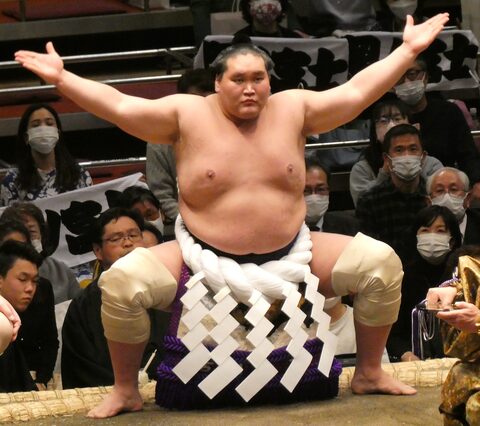
Photo: TSUBAME98 / CC BY-SA 4.0
Early Life & Path to Sumo
Terunofuji was born Gantulga Ganerdene on November 29, 1991, in Ulaanbaatar, the capital of Mongolia. Growing up in a country with a proud wrestling tradition — Mongolian national wrestling, known as bökh, is one of the nation's most celebrated sports — the young Gantulga developed an early passion for grappling arts. Mongolia has produced a remarkable number of elite sumo wrestlers, and Terunofuji would go on to become arguably the greatest of them all.
Like many Mongolian prospects, Terunofuji was recruited to Japan as a teenager to train in the strict, hierarchical world of the sumo stable system. He joined the prestigious Isegahama stable, whose head coach, Isegahama oyakata (formerly Yokozuna Misugisō), had a reputation for developing high-caliber talent. Terunofuji made his professional debut in January 2011, beginning the long climb through sumo's ranked divisions that all newcomers must undertake.
His physical gifts were immediately apparent. Standing at around 192 centimeters and possessing extraordinary strength and natural grappling instinct, he progressed rapidly through the lower divisions. By 2013, he had broken into the top division — the Makuuchi — marking the beginning of his journey toward the sport's elite ranks. To understand the full significance of these rankings, read our guide on sumo ranks and the path to Yokozuna.
Rise to Ōzeki — Becoming a Champion
Terunofuji's ascent through the Makuuchi division was swift and impressive. Competing with a combination of raw power and increasingly refined technique, he began collecting victories over the top wrestlers in the world. He won his first top-division tournament championship — known as a yūshō — at the May 2015 tournament (Natsu basho), defeating veteran Yokozuna Hakuhō in a decisive fashion that announced him as a genuine force in sumo.
That first championship, combined with strong results in surrounding tournaments, earned him promotion to Ōzeki — sumo's second-highest rank — in July 2015. At just 23 years old, Terunofuji had reached a rank that most wrestlers spend their entire careers trying to attain. He was widely regarded as a future Yokozuna, a once-in-a-generation talent destined for the summit of the sport.
During his peak Ōzeki years, Terunofuji won multiple yūshō and was a consistent presence in the final days of every tournament. His physical dominance on the dohyō (the raised clay ring) was remarkable — opponents found it almost impossible to push him out or throw him down when he was at full strength. He seemed on an inevitable path toward the prestigious rank of Yokozuna, sumo's highest honor, which is explained in detail in our article on sumo's ranking system.
The Fall — Devastating Injuries & Humbling Demotion
What happened next to Terunofuji is one of sumo's most tragic stories — and the backdrop against which his eventual comeback becomes so extraordinary. Beginning in 2017, injuries began to accumulate at a catastrophic rate. His knees, bearing the immense strain of supporting his large frame through the explosive impacts of elite sumo competition, began to break down severely. He also reportedly suffered from diabetes and underwent surgery for thyroid issues, compounding his physical difficulties.
The injuries forced him to withdraw from numerous tournaments. Under sumo's strict rules, an Ōzeki who fails to perform adequately over consecutive tournaments faces demotion — a process known as kadoban status followed by actual rank reduction. For Terunofuji, the unthinkable happened: he was demoted from Ōzeki, then continued to slide down the rankings as he missed tournaments due to his health crises.
By 2019, Terunofuji had fallen to the third division — the Sandanme division — far beneath the top-flight Makuuchi division where he had once reigned as a champion. This was a fall of historic proportions. Former Ōzeki champions simply did not sink this low. Many observers, fans, and even sumo insiders believed his career was effectively over. There were reports that retirement was being seriously considered. He had gone from a potential Yokozuna to a lower-ranked wrestler struggling to compete at all.
The personal and professional dimensions of this collapse are difficult to overstate. Sumo is an intensely demanding profession — wrestlers live communally in their stables, follow strict dietary and training regimens, and compete on the biggest stages in world martial arts. To experience such a public, documented collapse from the heights he had reached made Terunofuji's situation one of the most poignant in modern sports.
The Greatest Comeback in Sumo History
What followed defied almost every expectation. Rather than retiring, Terunofuji chose to fight back. Through an extraordinary combination of determination, physical rehabilitation, and sheer force of will, he began the slow, grinding process of working his way back up through sumo's ranked divisions. This was not a quick recovery — it was a years-long odyssey that required him to compete in tournaments far beneath his former status, against younger wrestlers who had grown up watching him as a champion.
The comeback gained momentum through 2019 and into 2020. Terunofuji began dominating at lower levels, winning tournament after tournament as he climbed back through the ranks. His knees remained a concern — he was often seen wearing heavy knee supports, and there were tournament days when he visibly struggled — but his technique, ring sense, and upper body power remained formidable.
By 2020, he had fought his way back to the Makuuchi division — a return that would have been remarkable in itself. But Terunofuji was not content to simply be a journeyman competitor. He began winning at the top level again, claiming yūshō championships as his body held together and his experience told against opponents who had never faced a wrestler of his caliber.
Key Milestones of the Comeback
- 2019: Competing at Sandanme (3rd division) level — the lowest point of his career
- 2019–2020: Gradual progression back through Jūryō (2nd division)
- Late 2020: Return to Makuuchi (top division)
- 2020–2021: Multiple tournament championship victories in the top division
- July 2021: Re-promoted to Ōzeki rank after dominant performances
- September 2021: Promoted to Yokozuna — the 73rd in sumo history
The statistical improbability of this comeback cannot be overstated. No wrestler in the modern era of professional sumo had ever fallen so low after being an Ōzeki — let alone come all the way back to win the sport's highest rank. Sports historians and sumo analysts consider Terunofuji's comeback one of the most remarkable in the history of any competitive sport, not just sumo wrestling.
Promotion to Yokozuna — The 73rd in History
In September 2021, the Japan Sumo Association's Yokozuna Deliberation Council recommended Terunofuji for promotion to Yokozuna following his dominant performance in back-to-back tournament championships. The formal announcement of his promotion to the 73rd Yokozuna was a moment of deep emotional resonance for the sumo world — a recognition not just of his technical and competitive achievements, but of the incredible human story behind them.
The Yokozuna rank is unique in sumo — it cannot be taken away once granted, unlike all other ranks. A Yokozuna who performs poorly is expected to retire with honor rather than be demoted. The rank is awarded extraordinarily rarely, and it carries with it immense responsibility, as Yokozuna are expected to embody the highest ideals of sumo's traditions and spirit. Learn more about this unique aspect of sumo in our dedicated article on sumo ranks and the Yokozuna system.
Terunofuji's elevation made him one of a relatively small number of Mongolian Yokozuna — a group that includes legendary figures such as Asashōryū and the long-reigning Hakuhō. In the eyes of many observers, his story surpassed all of them in terms of sheer drama and the obstacles he had overcome to reach the summit.
Following his promotion, Terunofuji performed the traditional dohyō-iri — the Yokozuna ring-entering ceremony — in the Shiranui style. This elaborate, ritualized ceremony is one of sumo's most visually striking traditions, and it marked Terunofuji's formal acceptance of all the responsibilities that come with being a Yokozuna.
Fighting Style & Signature Techniques
Terunofuji's sumo is built on a foundation of exceptional physicality combined with deep technical knowledge. His preferred style is classified as yotsu-zumo — a form of sumo that emphasizes gripping the opponent's mawashi (belt) and engaging in a close-quarters grappling battle. This style suits his enormous strength and leverage perfectly.
Signature Techniques (Kimarite)
- Yorikiri (force out): His most frequently used technique — driving opponents straight out of the ring with overwhelming power
- Uwatenage (overarm throw): A devastating throw performed with a belt grip, using his superior reach and strength
- Kotenage (arm lock throw): An effective technique when opponents try to break his belt grip
- Yoritaoshi (frontal crush out): Driving opponents down to the ground outside the ring
- Oshidashi (push out): Used when belt grips are unavailable
What makes Terunofuji particularly formidable is his patience. Unlike some power wrestlers who rely purely on explosive aggression, he is willing to work methodically, establishing his preferred grip and then applying relentless, grinding pressure. Opponents frequently describe the experience of wrestling him as facing an immovable wall — once he establishes his belt grip and sets his balance, shifting him becomes nearly impossible.
His defensive sumo is also elite-level. He rarely loses his footing even when opponents attempt to use his size against him with quick, evasive techniques. His low center of gravity — impressive for a man of his height — and his instinctive understanding of balance and leverage make him extraordinarily difficult to throw or trip.
Due to his ongoing knee issues, Terunofuji has had to adapt his footwork and rely even more heavily on upper body dominance. This adaptation actually demonstrates his technical sophistication — most wrestlers his size rely on lower body power as much as upper, but Terunofuji has learned to compensate brilliantly.
To understand more about the basic mechanics and techniques of sumo wrestling, visit our guide on how sumo works.
Career Records & Statistics
| Category | Detail |
|---|---|
| Professional Debut | January 2011 |
| Top Division (Makuuchi) Debut | Approximately 2013 |
| First Yūshō (Championship) | May 2015 (Natsu Basho) |
| Ōzeki Promotion | July 2015 |
| Lowest Rank Reached (during setback) | Sandanme (3rd Division) |
| Re-promoted to Ōzeki | July 2021 |
| Yokozuna Promotion | September 2021 |
| Yokozuna Number | 73rd |
| Top-division Yūshō (career) | 10 |
| Stable | Isegahama |
| Dohyō-iri Style | Shiranui |
| Fighting Style | Yotsu-zumo (belt-gripping) |
Terunofuji won 10 top-division yūshō over his career, though his long battle with knee injuries meant he missed significant portions of some tournament years. When healthy, he demonstrated an ability to dominate entire tournament fields, finishing with 15-0 perfect records or near-perfect records on multiple occasions — performances that rank among the finest in modern sumo history.
The historical uniqueness of his career trajectory — falling to the third division as a former Ōzeki before returning to become Yokozuna — is essentially without parallel in the sport's modern era. Sumo historians have noted that no comparably ranked wrestler has ever made such a dramatic recovery across such a wide span of the ranking ladder.
Legacy & Cultural Impact
Terunofuji's significance to sumo extends well beyond his competitive achievements. His story has brought new international attention to the sport, particularly as a narrative of perseverance and redemption that transcends cultural boundaries. In Japan, he is widely admired not just as an athlete but as an embodiment of the sumo ideals of dignity, resilience, and honor.
In Mongolia, he is a national hero. His success — particularly the comeback story — has inspired a new generation of Mongolian youth to pursue sumo wrestling professionally. The pipeline of Mongolian talent into professional sumo, already strong due to wrestlers like Asashōryū and Hakuhō, has been further energized by Terunofuji's extraordinary example.
His relationship with the Japanese sumo public is particularly interesting. Foreign-born wrestlers in sumo have sometimes faced complicated receptions, given the sport's deep roots in Japanese culture and Shinto tradition. Terunofuji, however, has earned genuine affection from Japanese fans through his conduct — he carries himself with quiet dignity, speaks respectfully of sumo tradition, and has consistently shown the kind of character that Japanese sumo culture prizes above all else.
Why Terunofuji's Story Matters
Sports history is filled with comeback stories, but few match the specifics of Terunofuji's journey:
- He fell further down the ranking system than virtually any comparable champion in sumo history
- He did so while battling multiple serious health conditions simultaneously
- He returned not just to compete, but to reach the sport's absolute pinnacle
- He maintained his character and dignity throughout both the fall and the rise
- He became Yokozuna without the benefit of perfect physical health — he fights every tournament managing chronic knee problems
Terunofuji retired in January 2025, following the Hatsu Basho, his knees finally unable to withstand the toll of years of competition. He retired as the 73rd Yokozuna with 10 top-division championships — and with a comeback story, from the depths of the Jonidan division back to the sport's highest rank, that many regard as the most inspiring in modern sumo.
His legacy, whatever happens next in his career, is already secure. The 73rd Yokozuna has given sumo one of its greatest narratives and one of its most compelling champions.
To learn more about the basics of this fascinating sport and how champions like Terunofuji compete, visit our comprehensive introduction at SumoSumoSumo — All About Sumo Wrestling.
Frequently Asked Questions about Terunofuji
What number Yokozuna is Terunofuji?
Terunofuji is the 73rd Yokozuna in sumo history. He was promoted to this highest rank in September 2021, following back-to-back tournament championship victories. The Yokozuna rank is awarded extremely rarely — only a small number of wrestlers throughout sumo's long history have ever attained it — making Terunofuji's achievement all the more remarkable given the obstacles he overcame to get there.
Where is Terunofuji from?
Terunofuji was born in Ulaanbaatar, Mongolia, on November 29, 1991. His real name is Gantulga Ganerdene. He is one of several elite Yokozuna to come from Mongolia, following in the footsteps of Asashōryū and the legendary Hakuhō. Mongolia has a deep wrestling tradition, and many of its athletes have found tremendous success adapting to the Japanese art of sumo.
What makes Terunofuji's comeback so special?
Terunofuji's comeback is considered one of the greatest in sports history because of how far he fell and how high he ultimately returned. During his injury-ravaged period from roughly 2017 to 2019, he dropped from the Ōzeki rank — sumo's second highest — all the way down to the Sandanme division (the third division from the top). This is an extraordinary fall for any professional wrestler, let alone a former tournament champion. He was battling severe knee problems, diabetes, and thyroid issues simultaneously. Rather than retire, he rehabilitated, competed at lower levels with patience and discipline, and climbed all the way back to claim the Yokozuna rank in 2021. No comparable wrestler in the modern era has ever made such a sweeping comeback.
What is Terunofuji's fighting style?
Terunofuji is primarily a yotsu-zumo wrestler, meaning he excels at gripping his opponent's mawashi (belt) and engaging in close-quarters grappling. His most common winning technique is yorikiri — walking or driving an opponent out of the ring while maintaining a belt grip. He also uses devastating overarm throws (uwatenage) and arm-lock throws (kotenage). His style emphasizes patience and power — he works methodically to establish his preferred grip and then applies overwhelming physical pressure. Despite knee problems limiting his lower body mobility, his upper body strength and technical ring sense remain elite.
How many tournament championships has Terunofuji won?
Terunofuji won 10 top-division tournament championships (yūshō) over his career. His first came at the May 2015 Natsu Basho when he defeated Yokozuna Hakuhō. He added more during his remarkable comeback period from 2020 onward, and continued winning after his promotion to Yokozuna in 2021, before retiring in January 2025. Knee-related absences interrupted his dominance at times, but his total of 10 championships ranks him among the most accomplished Yokozuna of the modern era.
Which stable does Terunofuji belong to?
Terunofuji belongs to the Isegahama stable (Isegahama-beya), one of Japan's respected sumo stables. The stable is headed by Isegahama oyakata, formerly the Yokozuna Misugisō. The Isegahama stable has produced multiple high-ranked wrestlers and is known for rigorous training and developing technically refined competitors. Terunofuji joined the stable as a teenager and has remained there throughout his career.
Is Terunofuji still wrestling in 2026?
No. Terunofuji retired in January 2025, following the Hatsu Basho. In his final years his participation was managed carefully around the condition of his knees, and he withdrew from several tournaments to protect his health. He retired as the 73rd Yokozuna, leaving behind one of the most inspiring comeback narratives in sumo history — from a fall to the Jonidan division back to the sport's highest rank.
What health problems has Terunofuji faced?
Terunofuji has faced a serious array of health challenges throughout his career. Most significantly, he has suffered from severe bilateral knee injuries that have required surgery and extensive rehabilitation. He has also reportedly dealt with diabetes and underwent surgery related to a thyroid condition. These health crises converged during the 2017–2019 period, causing his dramatic fall through the ranking system. Managing these conditions — particularly his knees, which bear enormous stress during sumo competition — has been a continuous challenge throughout his comeback and Yokozuna career.
How does Terunofuji compare to other great Mongolian Yokozuna?
Terunofuji belongs to an elite group of Mongolian Yokozuna that includes Asashōryū (68th Yokozuna) and Hakuhō (69th Yokozuna). Hakuhō is widely considered the greatest sumo wrestler of all time by sheer statistical achievement, having accumulated a record number of tournament championships over a dominant reign. Asashōryū was a ferociously competitive champion who transformed modern sumo. Terunofuji's legacy is somewhat different — while his total championship count may not reach Hakuhō's extraordinary levels, the quality of his story — the depths he fell to and the heights he returned from — gives him a unique place in sumo history. Many fans consider his comeback the single most inspiring individual narrative in modern sumo.
What does the Yokozuna ring-entering ceremony (dohyō-iri) look like for Terunofuji?
Terunofuji performs the Shiranui-style dohyō-iri — one of two styles of the formal Yokozuna ring-entering ceremony (the other being the Unryū style). In the Shiranui style, the Yokozuna extends both arms outward during a key moment of the ceremony. The dohyō-iri is a deeply ritualized, Shinto-influenced ceremony performed before the final bouts of each tournament day. The Yokozuna, wearing the distinctive thick white rope belt (tsuna) around his waist — the symbol of the rank — performs a series of powerful, deliberate movements including stamping of feet (shiko) to drive evil spirits from the ring. It is one of sumo's most visually powerful and culturally significant traditions.